The Myth Of Black Exceptionalism

Paul Luckett | Brainflurry.com The Myth Of Black Exceptionalism

A major downfall of my community is our participation in the myth of black exceptionalism.

The notion fed by a pitiful desire for proximity to whiteness that suggests those blacks who have somehow made it to the table (irrespective of how dubious the means) are somehow “different” than other blacks, a “credit to my race” -exceptional, but as evidenced by the limits imposed on our influence while at the table, still inferior.

I, however, am not exceptional in any way. I am what happens with a semi-stable, home-owning, two parent family and very modest resources.

I went to an elementary school in Atlanta, Georgia, that exposed me to a second language, German, in the second and third grade.

My parents could afford to supplement my education with activities such as piano lessons.

I was afforded opportunities in a well funded Jackson Public School District who could recruit exceptional teachers and offer programs such as Bailey Magnet School and the Jackson Academic and Performing Arts Complex.

I had opportunity through APAC to participate and compete in the visual arts and classical voice (what some think of as Opera, but its a little different).

I had opportunity at my high school, Bailey Magnet, to participate in string orchestra (violin), debate, forensics, student government, etc. etc.

See, I am not exceptional, I am an average person that is a confluence of those investments. People, by in large, are products of our investments. So, if we want different outcomes, we must make different investments.

What’s most needed in the black community, in my opinion, is not welfare but wealth.

The outcomes we find undesirable; crime, teenage pregnancy, and other ills of poverty are not because my people are deficient or broken, it is because of a broken system that artificially constricts the flow of resources to protect the advantage of some by starving the investments in others that are necessary to produce the outcomes we claim we want.

One of the most poignant examples of this “artificial constriction” was made during President Franklin D. Roosevelt’s New Deal, where the FEDERAL Housing Administration (not some backwater town in the deep South, mind you, but the federal government) adopted a documented policy to extend credit to whites, irrespective of their credit worthiness (they were essentially begged to take the loans) while creating racially restrictive conditions, where blacks were not only excluded from the loan program but were barred from even renting homes subsidized by FHA loans. It is to this day, one of the most significant contributors to the wealth gap. Many whites who were languishing in poverty as a result of the Great Depression, were lifted out by one of the largest government interventions (welfare program, if you like) in U.S. history -being given an appreciable asset, homes, while blacks were pushed further to the margins.

Beginning to address the problems we face today will require interventions on the scale of those that contributed to them. As much as it was true for whites during the depression, it is true for blacks today: the path out of poverty begins with possessing an asset that reliably appreciates in value. And, education ain’t it. It’s what we’ve been peddled -straddling us with enormous debt and very often useless parchment. But, in my opinion, that’s putting the cart before the horse. Education is important, but generally education should be profitable. It’s not alchemy. Education cannot create something out of nothing. At a societal level, education is a means of growing production and profit. What good is knowing without the wherewithal to do? What good is know how when we have no where to apply it? Therefore, education follows wealth.

Everything I do is driven by a God given love of my community as a whole and a desire for all of it to thrive. Blacks are a part of that community and we’ve got a tourniquet constricting the flow of vital resources throughout the body. So my efforts to eliminate these restrictions are not merely to benefit blacks but for the well being of us all. So, you want to stop kids from breaking in your truck? You want to deal with the issue of crime sustainably? It’s not more prisons. We’ve tried that. Making the long-term, positive investments for the outcomes we want is where we start.

So blacks, especially, who have achieved some affluency must stop perpetuating this lie that we’re special and that other blacks are in their predicament because they lack some innate quality that we, who have “made it”, have. We’re harming ourselves by deflecting from the real conversation to be had – how we’re going to accomplish wealth at scale. When the conversation drifts to a symptom, we must bring it back to the system.

I love you.
Originally posted on Facebook on February 14, 2021.

52 Weeks of Gratefulness #8 – Jarvis Brinson

Paul Luckett | Brainflurry.com Thankful For Jarvis Brinson

In Week 8 of 52 Weeks of Gratefulness, I give thanks for Jarvis S. Brinson.

I am who I am by the grace of God. As I reflect on my journey, I often find that grace beautifully expressed through the life and influences of others. Jarvis Brinson was such an influence in my life.

When I think of Jarvis, the simple, yet apt description of him would be: he’s just a good guy. Jarvis is and has always been a kind, wholesome, trustworthy human being.

Jarvis was one of my best friends through high school and one of my earliest friends, if not the first friend I had outside of family. Our friendship dates back to elementary school. We grew up in the same neighborhood and his house would be my most frequent destination after school, on weekends and during summers. I remember the grand, elaborate plans we would make for tree houses and forts we were going to build. We spent most of our time planning and discussing our plans. Planning is probably what characterized our friendship the most. We would often walk to and from G.N. Smith Elementary School together, discussing our plans.

One of the things I cherish most about our friendship is that it wasn’t all talk. A product of our mini-mastermind sessions was our both applying to and attending my beloved alma mater, Bailey Magnet High School, an institution that remains unmatched in its impact on my life. I largely have Jarvis to thank for that. He would hold me accountable to act on my plans and I would watch in awe as he’d execute on his.

I’ll never forget Jarvis getting a job over the summer of our 8th and 9th grade years and by 10th grade, this dude had a whole truck. And, it was not just a truck, it was a new truck! I was so impressed and proud of him. He’d sometimes give me a ride to school and would drive with the conscientiousness of a senior citizen. He was meticulous in his observance of road safety and never once did anything to show off. The dude was a freak -a 50 year old in a 15 year old’s body. Well, maybe not a 15 year old’s body. Jarvis always looked mature for his age. Dude had a full mustache and goatee as early as the 6th grade, while I, meanwhile, was trying to fill in the peach fuzz above my lip with my mom’s mascara! About the only give-away that he was a teenager was the music he listened to. I remember the satisfying “thunk” the radio would make when he would insert a tape into it. It was Jarvis that introduced me to genres of music beyond the walled garden of “Kixie 107”. As a preacher’s kid, it was the only secular radio station that was not contraband in my house. His music collection was the first time I encountered “Parental Advisory: Explicit Lyrics”. While Jarvis was buttoned up (or so appeared), his music was not. If there was any rebellious streak to be found, it was in his playlist.

Notwithstanding, Jarvis was the model of maturity. He was rock solid. He was a committed friend that followed through on his promises. He maintained his relationships purposefully and with intentionality. When we graduated and went off to differing colleges, Jarvis would write, yes write, full three and four page letters to stay in touch. In the beginning I would call and once or twice I would visit him but I came to a point in my life where I lost my way. But, Jarvis kept writing even when I did not respond. It is one of my sincerest regrets. I’d like to take this moment to say, “I’m sorry, Jarvis.” I’m sorry for taking your kindness and friendship for granted. I was fortunate to have ever been in your orbit. I’m sorry I didn’t appreciate the value of that. I humbly ask that you forgive me.

Yet, even with all the years that have transpired and my having taking the gift of his friendship for granted, I know I can again have a place with him, not because I assume his forgiveness or presume his graciousness, but because that’s just who Jarvis is.

I told a friend a few weeks ago who’s bearing with a wayward family member this: “When you’re dealing with someone who is lost, it is important that you do not move because the lost can only find their way when they have a fixed point to refer to”. Jarvis Brinson was such a point for me. I’m grateful. #52WoG

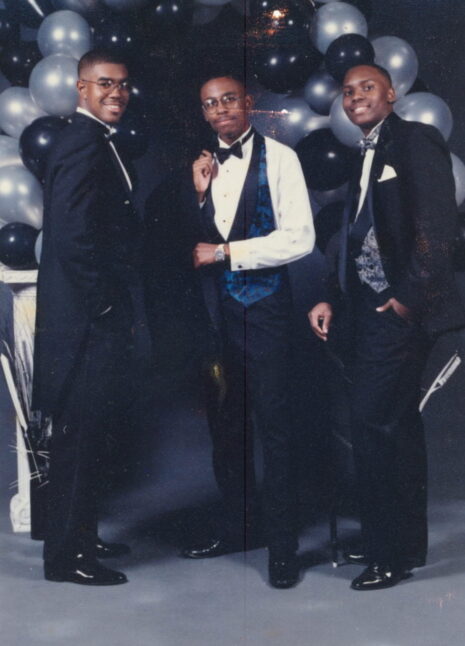
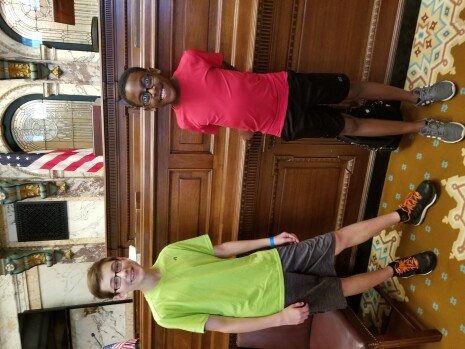
*Pictured from left to right, Jarvis Brinson, Paul Luckett and Christopher Johnson for our junior prom.

Black History: We Are Not Victims

Paul Luckett | Brainflurry.com Black History: We Are Not Victims

I reject constant depictions of black history that mischaracterizes us as perpetual victims.

Despite the popular, whitewashed depiction of our people, we are not victims but combatants.

We are and always have been active participants in the fight to live free, with dignity as a people, to control our own destiny, to both contribute to and benefit from the progress of every place our diaspora dwells.

Victims wait for justice from another.

Combatants seize it.

We employ strategy, take ownership of our losses and regroup to win the next battle.

Don’t be deceived, we’ve been fighting from the beginning. Our remarkable progress was not given but blood bought.

And, we will continue to fight until every chain is broken.

This is #blackhistory.

52 Weeks of Gratefulness #6 – Lessons From My Father About Work

Paul Luckett | Brainflurry.com Thankful For Lessons From My Father About Work

In 6 of 52 Weeks of Gratefulness, I give thanks for lessons from my father about work.

No one in the world works harder than my father, Rev. Paul Luckett. No one.

I remember when my Dad was a student in seminary, he was a full time student, paying his way through school as a custodian for our apartment building in Atlanta, Georgia, pastoring two churches and driving between school in Atlanta and the churches in Jackson, Mississippi every weekend.

I remember spending countless summer days with him and my little brother Nehemiah Luckett, cutting yards, painting houses, buffing floors, hanging shingles, etc.

My youngest brother James recently told my Dad, “Whew, you’re a hard worker, Daddy. That’s a good thing to be. But, don’t you think it’s time to go home now?”

With my Dad having such a strong work ethic, naturally he had lessons to pass along to us. Here are a few I hope to pay forward:

A want is something you work for. A gift is something you’re given.

No one is obliged to give you what you want –or anything for that matter.

If there’s something you want that you feel you’re owed, it’s no longer a gift but wages.

Wages require that you be hired. To be hired requires at least an informal contract that’s been expressed for work in exchange for wages.

Are you feeling like someone owes you something? Well, were you hired for the task that you think you’re owed for?

No one owes you for work you weren’t hired to do.

And, no one owes you for being a ‘good’ person. If your goodness is contingent on being compensated for it, you’re not a good person but a faker-for-hire.

Do the right thing because it’s the right thing to do. If anyone gives you anything, be grateful -you don’t get to place demands on a gift. If you have demands, if you want something, work as hard as it takes to get it. Wants aren’t owed but earned.

This is treasured wisdom from my father that is still ministering to me today. Thanks, Dad. I’m grateful. #52WoG

52 Weeks of Gratefulness #7 – Dr. Athelia and Placid Eze

Paul Luckett | Brainflurry.com Thankful For Dr. Athelia and Dr. Placid Eze

In 7 of 52 Weeks of Gratefulness, I give thanks for Dr. Athelia and Dr. Placid Eze.

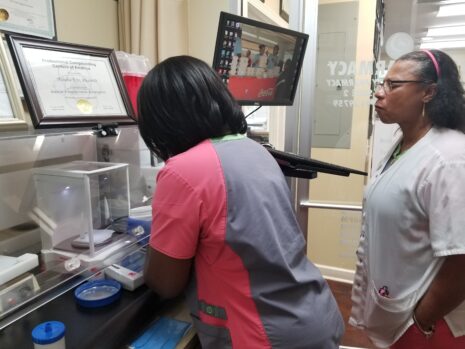
I was in my MR COMPUTER MAN service truck on Highway 82, headed back from a service appointment in Columbus to Starkville, when a tan 2001 Lincoln Town Car flew past me. As the car advanced ahead of me, the driver glanced over in my direction and suddenly the car’s speed dropped precipitously to match my own, our vehicles side-by-side on the highway. The driver locked her eyes on me, nodding her head, then pointing in my direction and afterward sped off. I was perplexed and slightly unnerved by the encounter, but little did I know that moment would mark the beginning of one of the most meaningful relationships of my career. Shortly thereafter, I received a call from Dr. Athelia Eze to provide IT services for her practice and that began a 20 year relationship with her and Dr. Placid Eze of Eze Family Medical Clinic.

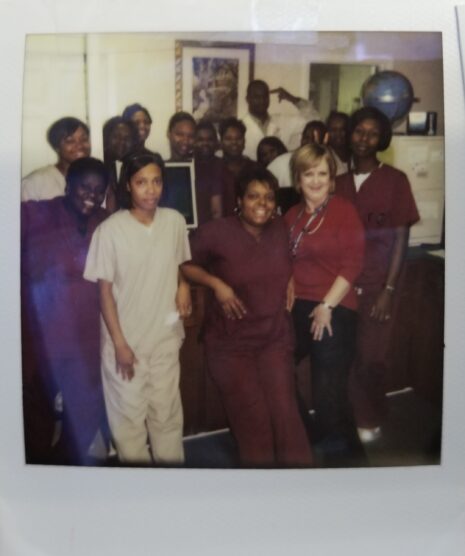
I’ll jump straight to the punch line and say that Dr. Athelia Eze and Dr. Placid Eze are unsung heroes in the black community, not only here in Starkville or in North Mississippi, but arguably throughout the southeast, having had clinics and pharmacies in (including, but not limited to) Starkville, Columbus and East Point, Georgia. No one has done more in this area to identify, recruit, educate and produce black medical professionals than Dr. Athelia and Dr. Placid Eze. They gave minorities a chance and an onramp into medical professions when no one else would.

This is not something I’ve heard about, the Eze’s themselves don’t even talk about it, it’s something I’ve watched them do quietly and purposefully. I would add that it’s also something they’ve paid dearly to do. I’ve watched them take people with little to no background in a professional setting, with next to zero experience in the medical field and in many cases pay to have them educated, personally study with them for exams and certifications to help them along the path to attain a meaningful and gainful career. It’s an absolute slough of trial and error, frustration, candidates quitting, spectacular failure, betrayal, disappointment, considerable expense, but always love.

Love characterizes their practice. You can hear it in Dr. Placid’s laugh and bedside manner with his patients. You can see it as Dr. Athelia would greet her customer’s children by name, knowing the candy each child preferred. It is a safe place, sadly still needed in 2022, where blacks can come and not get strange looks or funny treatment for the kind of insurance they have, for not having insurance, or for not looking like a ‘good client’ –whatever that means. Sure, as an I.T. professional I’m there installing network equipment or servicing computers but I’m always paying attention. And, when people came through those clinic doors or pulled up to the pharmacy drive-thru window they were treated as though they belonged there, as though they were wanted there. For better or worse the Eze’s focused on care first and would often work with their patients to figure out how to take care of the cost later.

Care for your people even when it costs you is the blackest thing I’ve ever seen.

Dr. Placid is from Nigeria and Dr. Athelia is from the coast, so they didn’t even know many of the people here that they would come to make investments in. As graduates of Morehouse College and Mercer University, respectively, as well as being members of the black greek letter organizations Kappa Alpha Psi and Alpha Kappa Alpha, they were steeped in an African-American culture that prioritized collective progress and embraced education not for education’s sake but as a tool for empowerment. So, in all that they do and everywhere they go, they’re always looking out for black people they can invest in -even if it costs them –because they love them. Again, the blackest thing I’ve ever seen.

I can hear the question, “Wait. Isn’t this just reverse racism?”

No.

Dr. Placid and Dr. Athelia love all people. In watching them serve, hire and work with people of all backgrounds, that would be clear to anyone.

They simply made it a point to focus love where love was lacking. You should too.

This is black history. I am inspired by the Eze’s commitment not only to offer compassionate medical care for their community but also to increase its economic capacity. While it doesn’t always look great for the bottom line, it always yields a profit because love never fails. Their love has born fruit in my life that I’m eager to bear in the lives of others. I’m grateful. #52WoG #BlackHistory

It’s All Good

I can’t tell you how many times I’ve been frustrated with a person or a situation, only to find that it was the very means God was using to meet my need or to do a work in someone’s life.

It reminds me that we have a loving Father who is always doing a good work (John 5:17) and there is nothing that happens in my life that He can’t use for good when I trust Him with it (Romans 8:28).

By faith I have this confidence, that some way, some how, it’s all good when I live for Him (2 Timothy 1:12).

Standing on this truth is how we can do 1 Thessalonians 5:16-18:
“Rejoice always, pray without ceasing, [and] in everything give thanks.”

The verse follows, “for this is the will of God in Christ Jesus for you.”

My attitude should reflect that.

I repent. #perfectourlove

An Unworldly Kingdom

Paul Luckett | Brainflurry.com An Unworldly Kingdom
What
kind of kingdom is this where the King kneels before His subjects and serves them? (John 13:1-17)
 
Its implications are staggering, among which is this:
 
No one in His kingdom is without care, honor or substance because our status in this kingdom does not come from how much you’ve got but how much you give.
 
That’s a kingdom I’d gladly give everything to.
 
That’s a kingdom I’d gladly die for.
 
It’s vastly superior to every human attempt at government.
 
Our marriages, our homes and the church should be a glorious demonstration of it.
 
Imagine the effect if everywhere that we have authority or influence were a demonstration of His kingdom. Glory! This is what I’m pressing into. We fall woefully short as believers but there is grace and power to fulfill our ministry.
 
Repent, the kingdom of heaven is as hand.

52 Weeks of Gratefulness #5 – Friends Who Make You Better

Paul Luckett | Brainflurry.com 52 Weeks of Gratefulness #5 – Friends Who Make You Better #52WoG

In 5 of 52 Weeks of Gratefulness, I give thanks for friends that make you better.

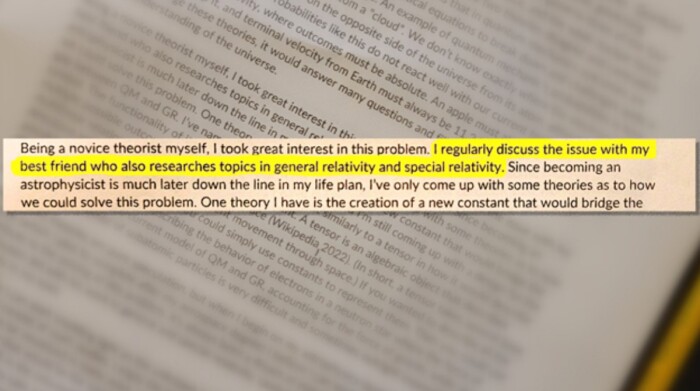
I was reading an application essay written by our youngest son and happened upon the following lines that warmed my heart:

“Being a novice [astrophysics] theorist myself, I took great interest in this problem. I regularly discuss the issue with my best friend who also researches topics in general relativity and special relativity.”

Our son Roman was referring to his long-time friend Sebastian Harvey, someone with whom he is free to be his authentic self and who also challenges him and encourages him to excel.

I remember them taking the ACT together and when Roman received his score he called his friend to share the news. It turns out they both scored higher than the 90th percentile and were only one point apart. All you could hear throughout the house was, “Let’s go!!” exclaiming their genuine excitement for each other.

This is the type of encouragement that makes you want to do better and to be better because you have someone in your corner that fully expects that you can. I am so glad our son has that in his life. I am deeply appreciative to Sebastian Harvey for providing it.

It reminded me of how blessed I’ve been to have had multiple friends in my life like that. I am also reminded of how worthwhile it is to be that for others. I’m grateful. #52WoG

52 Weeks of Gratefulness #4 – Dr. George Bennett

Paul Luckett | Brainflurry.com 52 Weeks of Gratefulness #4 – Dr. George Bennett #52WoG

The flight instructor stands at the hanger, wearing old-school Chucks, beige cargo pants, a beige safari style shirt and a beige bucket sun hat. He’s scribbling into a small notebook using one of the many pens lining his left breast pocket. He occasionally looks up, peering over black-rimmed 1960’s style glasses to coach aspiring pilots through the nuances of a pre-flight check, expertly interspersing amazing tales of aviation history, daring feats of flight and near death encounters he’s personally experienced during his long and storied career. He smiles with each recounting and you can see the joy in his eyes from having spent his life doing what he loved.

Dr. Bennett is in his 80’s now, still crawling under a sailplane to check for the signs of wear and material fatigue that a novice might miss. He’s literally a legend but you’d never know because he’s utterly unassuming and completely approachable. He spends his weekends, oftentimes in grueling heat, climbing into a cockpit to pass on his vast experience to anyone wise enough to learn from it.

The flight instruction is being offered by the MSU Soaring Club provided through Mississippi State University. We’ve brought our son Roman to one of their meetings after a chance and kind introduction to the club by Jamie Jones. We’re hoping that Roman can join the club and start taking flying lessons. But as we look around, there is no one else near his age or his size. At eleven years old, the parachute nearly swallows him and probably weighs as much he does!

Being the expert that he is, Dr. Bennett makes mention of the minimum weight needed to achieve the proper distribution in the glider. At this point, Dr. Bennett could have very legitimately said Roman was not quite old enough to participate and that would have been that. But, Dr. Bennett looks at Roman and asks him directly, “You want to fly, don’t you? How much do you weigh?” After receiving Roman’s weight, Dr. Bennett makes a calculation and proceeds to use lead bags (those that typically holds down a wing of the gliders while it is stowed in the hanger) to make up for the lack in weight. But then, we’re faced with a new problem -Roman’s legs aren’t long enough to reach the pedals. Again, Dr. Bennett makes every accommodation so Roman can fly, telling him, “For now, we’ll focus on teaching you the stick controls and I’ll take care of everything else.”

From that moment almost five years ago, Dr. George, as we affectionally refer to him now, has not stopped pouring into Roman. He uses every break, every free moment between flights to share another lesson to prepare Roman for the next stage of his development as an aviator. It is quite something to behold how this man’s love of flying extends beyond the subject to his students. And, he does it all so effortlessly.

I’m not interested in aviation beyond supporting our son’s interest in it, but the apparent love around what Dr. George does has a draw to it. It makes me want to be around him, regardless of what he’s talking about. He’s teaching my son to fly but his example is teaching me a valuable lesson too. I’m grateful. #52WoG

Serving Effectively Through Rejection

Paul Luckett | Brainflurry.com Working Effectively Through Rejection

The area is devastated. You’re distributing life saving supplies as a volunteer of a charitable organization. During your deployment, you encounter people who don’t want help.
 
To be offended or to get angry with those who reject the help would suggest you’ve forgotten whose supplies they are and why you’re there in the first place.
 
The more appropriate and effective reaction would be to bear in mind that the resources are not ours and the work is not about us, it’s about saving lives.
 
Consider Jesus’ response when a village rejects Him and His disciples, being offended asked, “Lord, do You want us to command fire to come down from heaven and consume them, just as Elijah did?” The scripture says, “But He turned and rebuked them, and said, ‘You do not know what manner of spirit you are. For the Son of Man did not come to destroy men’s lives but to save them.’ And they went to another village.” Luke 9:53-56
 
All of our service must flow from Love. We are serving because we were sent out of care for those we serve. If people’s well-being were our ultimate concern as it is for the One who sent us, we’d interact with people in such as way that even if they did reject our ministry, they’d be clear about where they can find help should they ever want it.
 
To be clear, help is not our little group or a church building, help is in Christ alone. We can work through opposition and rejection with patience and lovingkindness by remembering who’s work it is in the first place and sharing His heart.