Originally posted on Facebook on Saturday, June 27, 2026.
Yesterday, during six hours of rough riding in a U-Haul, Melissa and I enjoyed the great love ballads of 90s R&B.
There, love was painted in beautiful and vivid feelings;
like a spring breeze,
a summer rain,
the gentle lapping of waves,
or walking, holding hands under the changing leaves of fall.
Listening, I realized our reality was not like the love in those songs;
love that I grew up so wanting;
love as a thread of euphoria that ran through everything, where a break in that thread means the love is gone or never was.
Our love is not that; some high to be maintained.
Our love is a threefold cord that holds
through embraces, distance, changes, betrayal, cuddles, loneliness, depression, arousal, and folding clothes; it's a through-line that carries it all.
The love of the songs is measured in feeling.
The love of our life just is.
After
the breeze wanes,
the water is still,
and the trees are bare,
this love remains.
Our love is the canvas we share,
not the flat page of a perfect moment,
but the quiet, durable consistency of a shared hope that shapes everything.
Like a rough ride, painful even in parts, that I'd do all over again,
a reality carrying more beauty than any love song ever made.
Originally posted on Facebook on Saturday, April 25, 2026.
Every Friday someone asks me, "Got any plans for the weekend?" And my response is always the same: "I hope not."
I mean that.
In my introvert brain, I've gone places and done stuff all week. My friends and family are like, yeah but that's work, we're talking about different stuff—fun stuff.
Honestly, it's just more "stuff" to me. Sure, I prefer to do "stuff" with you, but not at the expense of more stuff. Stuff burns me out. We need to reduce stuff somewhere. 😅 So, that's what I end up using paid time off for.
I need days of rest, and on those days I don't want to do stuff, I just want to be. Why does that feel like such a weird ask?
Originally posted on Facebook on Friday, April 24, 2026.
I've been so blessed studying with my friends of Starkville Bible U. We've been studying John 7:53–8:11, known as The Pericope Adulterae (The Woman Caught In Adultery).
We discussed how this passage was added, by some estimates, centuries after the Gospel of John was written and was almost certainly not written by John.
It sparked a great discussion about sources, apocrypha vs canon, and how the Bible we have today came to be. While the textual history of this passage is debated, we receive it as consistent with the heart and teaching of Christ and accept its witness as the Spirit's own.
What a great time of study. It has sharpened my view of Christ. Because of it, I see something I had not previously noticed in this account of the woman caught in adultery.
Jesus affirms the law that declares her guilty ("[…] throw a stone at her […]" 8:7)
AND He showed her mercy ("Neither do I condemn you […]" 8:11).
Why did Jesus show her mercy? Because He is soft on sin?
No.
Because unlike her accusers, Jesus is not being selective and prejudicial about which sin to condemn (8:15).
He's judging righteously and dealing with all of the sin—hers, theirs and ours.
If Jesus were to damn to destruction for sin as the woman's accusers desired, the just thing to do would be to destroy us all.
But, God.
God who is rich in mercy, so loved the world, that He gave Jesus, His only begotten Son, so that whosoever believes in Him would not perish but have eternal life. (John 3:16)
But, isn't this just a pass? Doesn't it sidestep the law?
No. It fulfills it.
"And the LORD commanded us to observe all these statutes, to fear the LORD our God, for our good always, that He might preserve us alive, as it is this day."
— Deuteronomy 6:24
The heart of God as revealed in Jesus Christ has always been for our good, to have life and to purge us of what kills us—sin.
That is the purpose of the law—to reveal sin, point us to life, and turn us from death—to bring us to the only means that salvation can be permanently accomplished: the life, death and resurrection of Jesus.
The shedding of Jesus' blood not only releases us from the penalty of sin, it pays it—all of it. Thereby, God is not only merciful but just. God is not flippant about sin but through the sacrifice of His Son, He demonstrates its immeasurable cost.
There's more.
Jesus commands the woman, "Go and sin no more."
But unlike the religious folk who "bind heavy burdens, hard to bear, and lay them on men’s shoulders" yet being unwilling to lift a finger to help them with it (Matthew 23:4), Jesus empowers her to do what He commands through the only possible means: Himself.
"When Jesus had raised Himself up and saw no one but the woman, He said to her, 'Woman, where are those accusers of yours? Has no one condemned you?' She said, 'No one, Lord.' And Jesus said to her, 'Neither do I condemn you; go and sin no more.' Then Jesus spoke to them again, saying, 'I am the light of the world. He who follows Me shall not walk in darkness, but have the light of life.'”
— John 8:10-12
We who believe are likewise empowered. Our salvation is not achieved through mere legal maneuvering, but by His life in us through His resurrection. Our faith is not philosophical. Jesus does not just give us an idea, He gives us new life and power.
His righteous standard is not compromised. He commands us to go and sin not, and we CAN obey by His life working through us as we abide in Him rather than resist Him. (1 John 5:3)
Imagine my surprise to find the Gospel in these 12 verses. No wonder its witness has been preserved.
My key takeaway is Jesus is the Judge. I am not. And His desire is life, not death.
When I consider the sins of others, I must not only deal with their sin, but with it all—and to do so the way I want the Judge to deal with mine: mercifully, compassionately, and correctively, so that it leads to life and not death. So, it’s not a matter of not addressing sin, but whether I do so righteously and as one who stands with another in accountability rather than against them as an accuser.
Grace and truth.
Like Jesus.
Thank you for the privilege of breaking bread with you.
Originally posted on Facebook on Monday, April 13, 2026.
Seeing students light up is one of my favorite things. The Mississippi State Cowbell Capture The Flag Cybersecurity Competition is accessible enough for students to grasp, yet challenging enough to push them to stretch and grow.
On the ride home, one of our students said, “It’s hard, but fun.” That pretty much sums up why this is the highlight of our year in the Junior Tech program.
Special thanks to @[1457223027:2048:Shelly Hollis] and @[100070802282797:2048:Cce Msstate], Dr. Trawick and Viceroy, the Cyber Clubs at MSU, and the MSU Computer Science & Engineering (CSE) Department for providing such a wonderful opportunity for our students.
Originally posted on Facebook on Thursday, March 5, 2026.
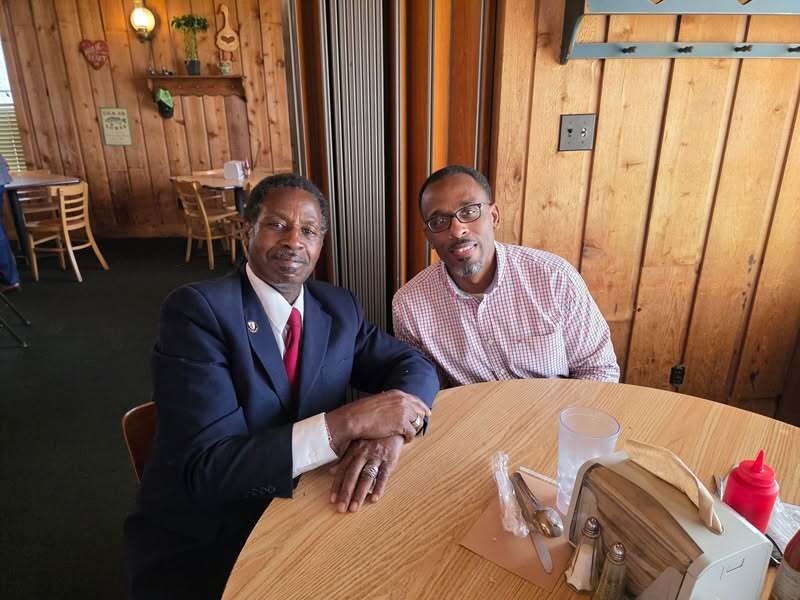
In Week 10 of 52 Weeks of Gratefulness, I give thanks to God for a proud moment.
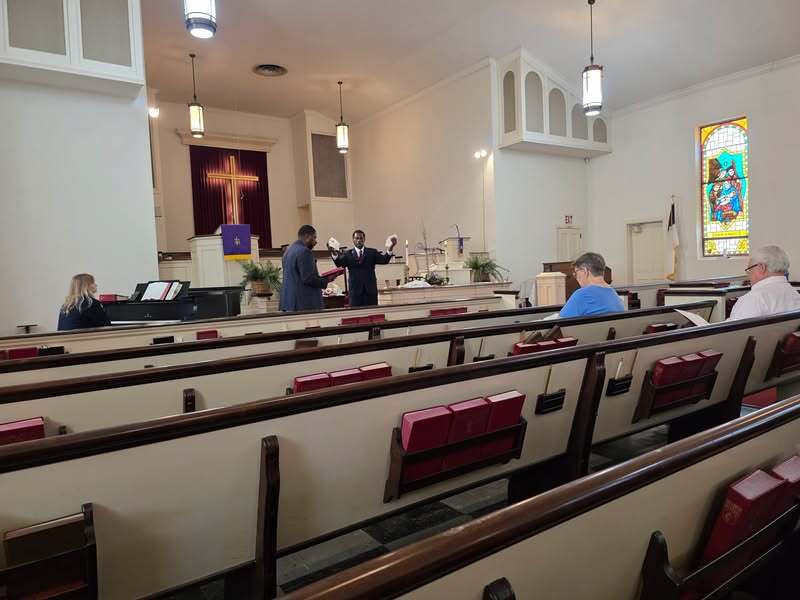
I got to hang out with our dad this past weekend for his birthday. Anyone who knows him knows it’s hard to pin him down. He’s always on the move. But one sure place to find him is in church on Sunday morning… or somewhere eating afterward 🤣
So that’s where I met him—at a small Methodist church on the outskirts of town.
What he was doing there was remarkable.
Our dad stepped down from the pastorate a couple of years ago after 50 years of pastoring. He could have gone anywhere. Instead, he chose to support a young Black pastor who is just getting his start at a church with maybe 10–12 people in attendance.
Being there with Dad was nostalgic.
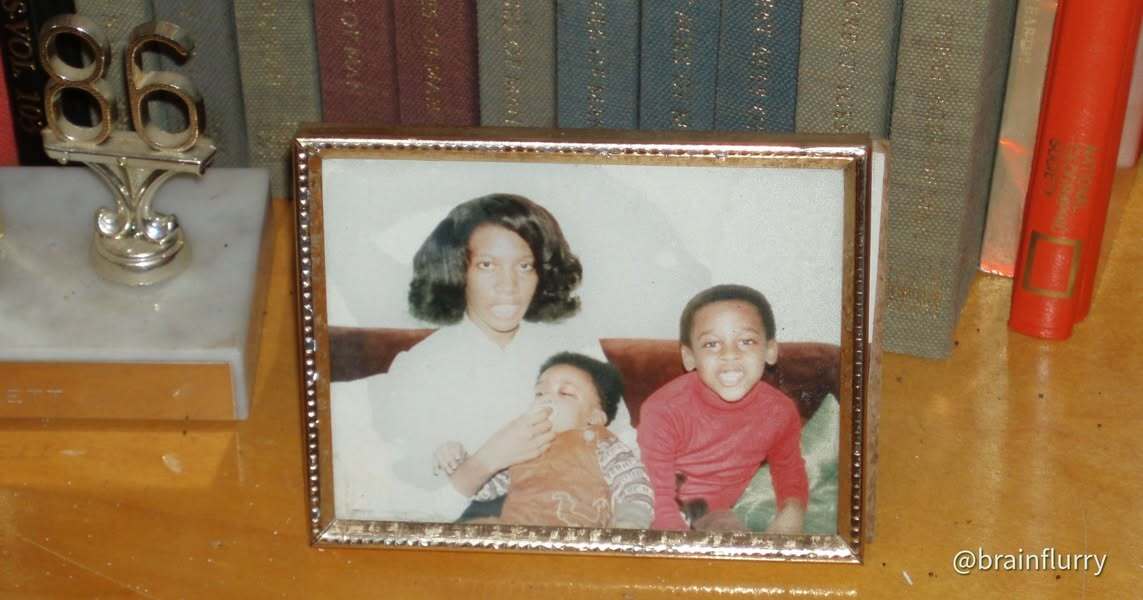
I remember back when our family was assigned to a new parish. There were months when it was just our family and one or two others on Sunday morning. But Dad stayed the course, and that church grew into a community of friends I’m still connected with to this day.
I once asked him about retirement some time ago, and without hesitation he responded:
“This is not a job, son. It’s a calling.”
And here I find him, tirelessly doing what he was called to do—being who he is.
He is consistent to a fault.
It’s something I admire and aspire to.
During the service, the pastor asked if anyone had any news to share. Dad sat up a little bit straighter, pointed to me, and said,
Originally posted on Facebook on Friday, February 27, 2026.
In Week 9 of 52 Weeks of Gratefulness, I give thanks to God for my Black history.
I grew up in an all-Black neighborhood in Jackson, Mississippi that, at the time, was just a neighborhood to me.
I remember the sound of lawn mowers early on Saturday mornings.
I remember tree houses.
I remember the joyous squeals and laughs of kids playing in the street, and me rushing to finish my homework so I could join them.
I remember walking home from G.N. Smith Elementary School.
I remember the candy lady.
I remember my Dad working at DeSoto Furniture right down the street.
I remember him putting me in his lap as he drove a forklift (you didn't hear that, OSHA).
I remember staying at my neighbor's house when my mom was sick and my dad was at work.
I remember my first internship at a clinic owned by a Black doctor that, at the time, was just a doctor to me.
I remember summer camps at Jackson State University taught by Black professors that, at the time, were just instructors to me.
I remember going to Bailey Magnet High School where I was surrounded by bright, ambitious, Black kids that, at the time, were just other kids to me.
I remember the debate team.
I remember my best friend in high school scoring a perfect 36 on the ACT.
Growing up where Black people were together, hard-working, accomplished, and contributing to the vitality of our community, at the time, were just people living to me.
That was my norm.
The beauty and brilliance that were so ordinary to my Black experience indeed grew naturally from the seed of our common humanity. But the space and conditions for it to bloom were blood bought.
Looking back, I realize what was normal to me was anything but. My reality was a dream my ancestors fought for against those who would kill it.
It is a dream I too am committed to protect and a reality I'm determined to build, especially for those whom it is unjustly denied.
That's the legacy of my black history which I aim to pass on. It is a gift not only to Blacks but to us all. We are all richer and not poorer for it.
The legacy of my Black history is the enduring devotion to building places where flourishing is the norm for everyone in it.
I'm grateful.
In honor of James Donald, a man who taught Black kids that excellence is in us and that it was our responsibility to bring it out. He is being laid to rest today.
Originally posted on Facebook on Monday, February 16, 2026.
It's been a dry season.
I've not heard anything from the Lord for weeks. It is why my writing has been sparse.
If I suddenly found myself in a position to witness, I could only give information right now. I could academically exegete Biblical text, but, I'd struggle to make a personal introduction. Because unlike information, an introduction requires the person's presence and it feels like He's not in the room.
It's bittersweet. This profound sense of absence reminds me that I once enjoyed His presence. I so miss Him.
It raises the question, why does He feel distant? Have I done something wrong?
That last question is a tar pit. Of course I've done something wrong—countless things.
But remember,
He drew near to us while we were His enemies (Romans 5:10),
"While we were still sinners, Christ died for us," —Romans 5:8,
and,
"[nothing] shall be able to separate us from the love of God which is in Christ Jesus our Lord." —Romans 8:39.
By grace, through faith, I am in Christ and the Father now deals with me as a son, not as a criminal to be condemned and cast away, but as His child to be chastened and cultivated.
My performance does not nullify His purpose, nor His promises.
I am His child (Romans 8:16). His Spirit is the proof (Ephesians 1:13–14). The fruit of His Kingdom is the observable evidence (Matthew 7:16). He promised to not leave me alone (John 14:18).
And He did not leave. I know I am not empty. Breath is there even when nothing is said.
I believe God when He says that He works all things together for the good of those who love Him and are called according to His purpose (Romans 8:28). So, I believe this quiet season is for good.
I prayed some time ago that God would help me to love the Father the way His Son Jesus does, to love the Son the way the Father does, and that God would reveal any obstruction in my heart that hinders that so I could confess it to Him and be cleansed of it (1 John 1:9).
I often do not like the way God answers prayer. I had no idea silence might be the way He answers.
Sanctification sucks.
But, the silence is instructive. How I wait reveals what I want. And what I want reveals competing identities and desires (Romans 7:21-25).
In waiting, I find myself having thoughts I would have never had while I was enjoying His presence. But silence has a way of revealing what the noise of activity hides.
Like being married to a spouse who has been away for some time—physically, figuratively, or both—you wonder. I feel alone, am I alone? Is this relationship real? Is this really of any benefit to me? Should I wait on them to give me what I want, or should I get it some other way?
This is exacerbated by the feeling that my life is in disarray, that nothing is going well, that I'm not doing anything right. I don't particularly like who I am right now, or at least what circumstances suggest about me.
I can attempt to drown out these feelings with the noise of more activity. Or, I can sit with the silence and what it reveals.
When I sit with it, I am confronted with the question of whether I want God's presence or the reassurance His presence provides?
The truth is, I am insecure. I crave constant reassurance. I want to be repeatedly told that I am ok and that I am safe.
My resolve begins to cave in the absence of constant reinforcement—circumstantially or relationally. The problem with that is one of integrity. I am tempted to act in a way that is inconsistent with my commitment to get what I want. I can be moved.
I have been shown that instead of constant reassurance, I need constant trust—to choose on the basis of what I know to be true, and to honor that choice by continuing to operate on that basis even when it is out of sight.
In order to love the Father like the Son and to love the Son like the Father, I must become immovable. This requires conviction, commitment and character—all part of God's work of conforming us to the image of Christ. I should love because of the God-given desire of the new creature—because that's who I am, not because of how it feels.
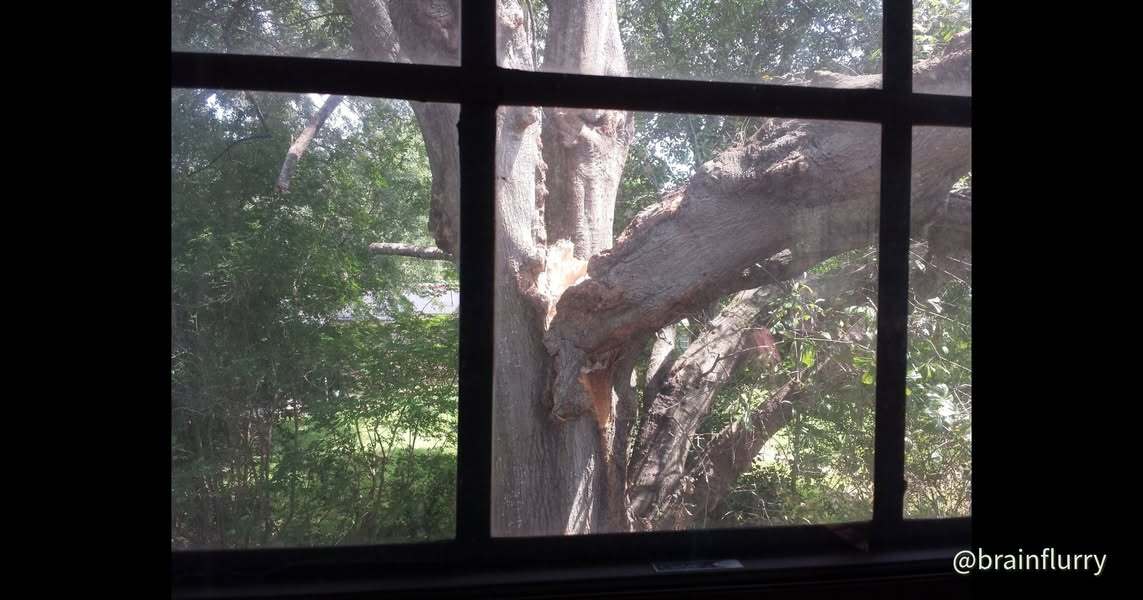
During the most recent ice storm, a large branch partially split from a tree near our house. It posed no danger. The problem was cosmetic. Personally, I care little about a bent tree limb. But as a husband, I wanted to cut the limb down in service to our home. It was a desire that flowed from identity that compelled me. Yet at the same time, part of me wanted to and part of me didn't. Ultimately, I did not cut the limb because I felt like a husband; I cut it because I am one.
This answers the internal struggle of what to do with my feelings.
I acknowledge them.
I listen to their information, but not their instruction.
My feelings do not rule me, instead I govern them (Genesis 4:7).
I examine them for what desire they're attached to and order them so that the greater always rules the lesser (1 Corinthians 9:27).
This desire is the greatest:
To be with the Lord.
To be a faithful spouse to Him.
So, as I am enabled by the Holy Spirit, I choose to operate consistently with that conviction, commitment and character. I serve His house and wait patiently on Him (Philippians 2:13).
Because by His grace, that's what I want and that's who I am.
What I need more than validation is to move according to what I value most.
Lord, I surrender my need of validation to you, and confess my unbelief of the validation you've already provided (Romans 8:30). Help me rest in my acceptance in the beloved (Ephesians 1:6) that I may serve You with boldness, doing those things that please You, knowing You have not left me alone (John 8:29, 14:23).
Originally posted on Facebook on Thursday, January 29, 2026.
In Week 5 of 52 Weeks of Gratefulness, I give thanks to God for Mary's daughters.
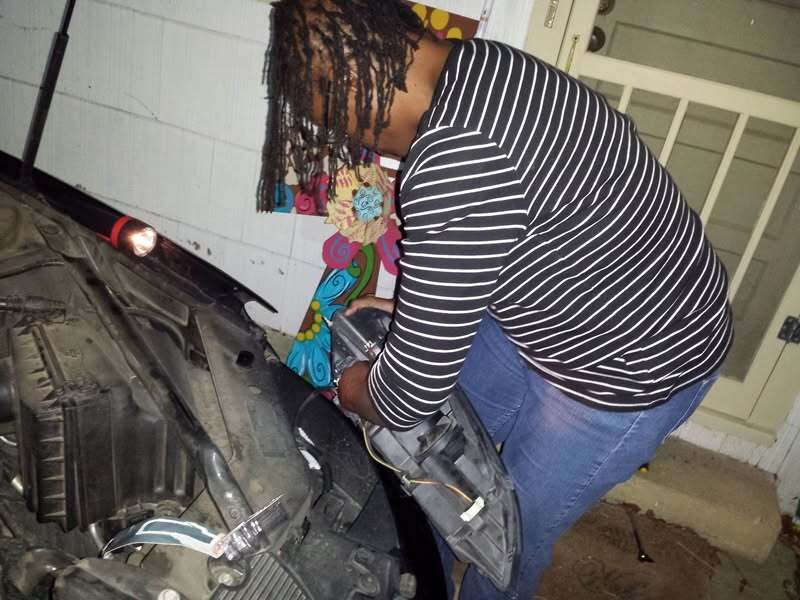
What you see in this picture is who I'm married to—a woman who is fearless, independent, and able to do anything.
When we were in college, even before we were dating, I remember Melissa asking me if I would help her with a blown taillight. I had never been so excited to do manual labor in all my life!
Because I knew that she didn't *need* me to do it, but she wanted me to. It was a privilege.
She could have definitely done it on her own. She can do anything.
And, she's largely that way because of her mother, Mary Harris, who wouldn't let anything get between her and getting it done. I see that in all of the Harris women—a quiet fierceness, a strength and beauty that evokes awe and respect.
I count myself privileged to be married to one of Mary's daughters.
I'm grateful.
In loving memory of Mrs. Harris whose birthday is this Sunday, February 1st.
Originally posted on Facebook on Thursday, January 29, 2026.
In Week 5 of 52 Weeks of Gratefulness, I give thanks to God for Mary's daughters.
What you see in this picture is who I'm married to—a woman who is fearless, independent, and able to do anything.
When we were in college, even before we were dating, I remember Melissa asking me if I would help her with a blown taillight. I had never been so excited to do manual labor in all my life!
Because I knew that she didn't *need* me to do it, but she wanted me to. It was a privilege.
She could have definitely done it on her own. She can do anything.
And, she's largely that way because of her mother, Mary Harris, who wouldn't let anything get between her and getting it done. I see that in all of the Harris women—a quiet fierceness, a strength and beauty that evokes awe and respect.
I count myself privileged to be married to one of Mary's daughters.
I'm grateful.
In loving memory of Mrs. Harris whose birthday is this Sunday, February 1st.
Originally posted on Facebook on Sunday, January 25, 2026.
To those who call themselves Christians and consent to the deaths of Renée Good and Alex Pretti, and argue that the agents acted within the law, to decide the taking of a life on the basis of what is permissible by law is a woefully low bar.
That is not the standard of the Kingdom.
Jesus is the standard.
He was sent in love and came that we may have life, not to destroy it (John 3:16, 10:10, Luke 9:56).
It is important to note that America is not the Kingdom and it is important not to conflate the two. Notwithstanding, the Kingdom operates within every place that disciples of Christ are, and those places should be healthier as a result.
That is not what happened in the killing of Renée Good and Alex Pretti.
I will resist you doing what is counter to Christ in Christ's name. Fruit is how we discern (Luke 6:44).