Originally posted on Facebook on Friday, February 27, 2026.
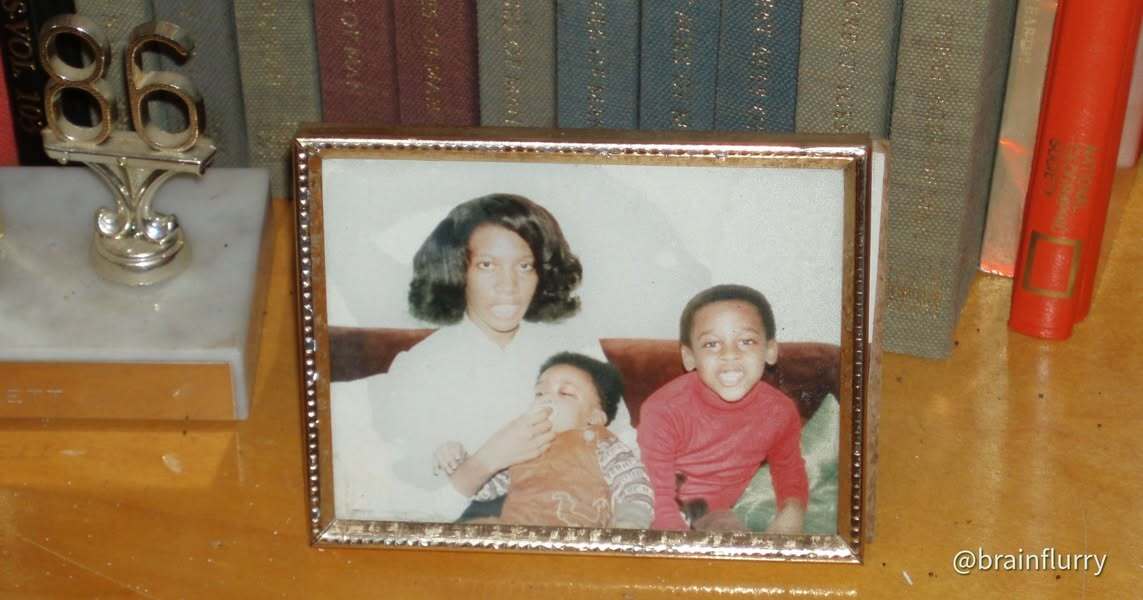
In Week 9 of 52 Weeks of Gratefulness, I give thanks to God for my Black history.
I grew up in an all-Black neighborhood in Jackson, Mississippi that, at the time, was just a neighborhood to me.
I remember the sound of lawn mowers early on Saturday mornings.
I remember tree houses.
I remember the joyous squeals and laughs of kids playing in the street, and me rushing to finish my homework so I could join them.
I remember walking home from G.N. Smith Elementary School.
I remember the candy lady.
I remember my Dad working at DeSoto Furniture right down the street.
I remember him putting me in his lap as he drove a forklift (you didn't hear that, OSHA).
I remember staying at my neighbor's house when my mom was sick and my dad was at work.
I remember my first internship at a clinic owned by a Black doctor that, at the time, was just a doctor to me.
I remember summer camps at Jackson State University taught by Black professors that, at the time, were just instructors to me.
I remember going to Bailey Magnet High School where I was surrounded by bright, ambitious, Black kids that, at the time, were just other kids to me.
I remember the debate team.
I remember my best friend in high school scoring a perfect 36 on the ACT.
Growing up where Black people were together, hard-working, accomplished, and contributing to the vitality of our community, at the time, were just people living to me.
That was my norm.
The beauty and brilliance that were so ordinary to my Black experience indeed grew naturally from the seed of our common humanity. But the space and conditions for it to bloom were blood bought.
Looking back, I realize what was normal to me was anything but. My reality was a dream my ancestors fought for against those who would kill it.
It is a dream I too am committed to protect and a reality I'm determined to build, especially for those whom it is unjustly denied.
That's the legacy of my black history which I aim to pass on. It is a gift not only to Blacks but to us all. We are all richer and not poorer for it.
The legacy of my Black history is the enduring devotion to building places where flourishing is the norm for everyone in it.
I'm grateful.
In honor of James Donald, a man who taught Black kids that excellence is in us and that it was our responsibility to bring it out. He is being laid to rest today.
Originally posted on Facebook on Monday, February 16, 2026.
It's been a dry season.
I've not heard anything from the Lord for weeks. It is why my writing has been sparse.
If I suddenly found myself in a position to witness, I could only give information right now. I could academically exegete Biblical text, but, I'd struggle to make a personal introduction. Because unlike information, an introduction requires the person's presence and it feels like He's not in the room.
It's bittersweet. This profound sense of absence reminds me that I once enjoyed His presence. I so miss Him.
It raises the question, why does He feel distant? Have I done something wrong?
That last question is a tar pit. Of course I've done something wrong—countless things.
But remember,
He drew near to us while we were His enemies (Romans 5:10),
"While we were still sinners, Christ died for us," —Romans 5:8,
and,
"[nothing] shall be able to separate us from the love of God which is in Christ Jesus our Lord." —Romans 8:39.
By grace, through faith, I am in Christ and the Father now deals with me as a son, not as a criminal to be condemned and cast away, but as His child to be chastened and cultivated.
My performance does not nullify His purpose, nor His promises.
I am His child (Romans 8:16). His Spirit is the proof (Ephesians 1:13–14). The fruit of His Kingdom is the observable evidence (Matthew 7:16). He promised to not leave me alone (John 14:18).
And He did not leave. I know I am not empty. Breath is there even when nothing is said.
I believe God when He says that He works all things together for the good of those who love Him and are called according to His purpose (Romans 8:28). So, I believe this quiet season is for good.
I prayed some time ago that God would help me to love the Father the way His Son Jesus does, to love the Son the way the Father does, and that God would reveal any obstruction in my heart that hinders that so I could confess it to Him and be cleansed of it (1 John 1:9).
I often do not like the way God answers prayer. I had no idea silence might be the way He answers.
Sanctification sucks.
But, the silence is instructive. How I wait reveals what I want. And what I want reveals competing identities and desires (Romans 7:21-25).
In waiting, I find myself having thoughts I would have never had while I was enjoying His presence. But silence has a way of revealing what the noise of activity hides.
Like being married to a spouse who has been away for some time—physically, figuratively, or both—you wonder. I feel alone, am I alone? Is this relationship real? Is this really of any benefit to me? Should I wait on them to give me what I want, or should I get it some other way?
This is exacerbated by the feeling that my life is in disarray, that nothing is going well, that I'm not doing anything right. I don't particularly like who I am right now, or at least what circumstances suggest about me.
I can attempt to drown out these feelings with the noise of more activity. Or, I can sit with the silence and what it reveals.
When I sit with it, I am confronted with the question of whether I want God's presence or the reassurance His presence provides?
The truth is, I am insecure. I crave constant reassurance. I want to be repeatedly told that I am ok and that I am safe.
My resolve begins to cave in the absence of constant reinforcement—circumstantially or relationally. The problem with that is one of integrity. I am tempted to act in a way that is inconsistent with my commitment to get what I want. I can be moved.
I have been shown that instead of constant reassurance, I need constant trust—to choose on the basis of what I know to be true, and to honor that choice by continuing to operate on that basis even when it is out of sight.
In order to love the Father like the Son and to love the Son like the Father, I must become immovable. This requires conviction, commitment and character—all part of God's work of conforming us to the image of Christ. I should love because of the God-given desire of the new creature—because that's who I am, not because of how it feels.
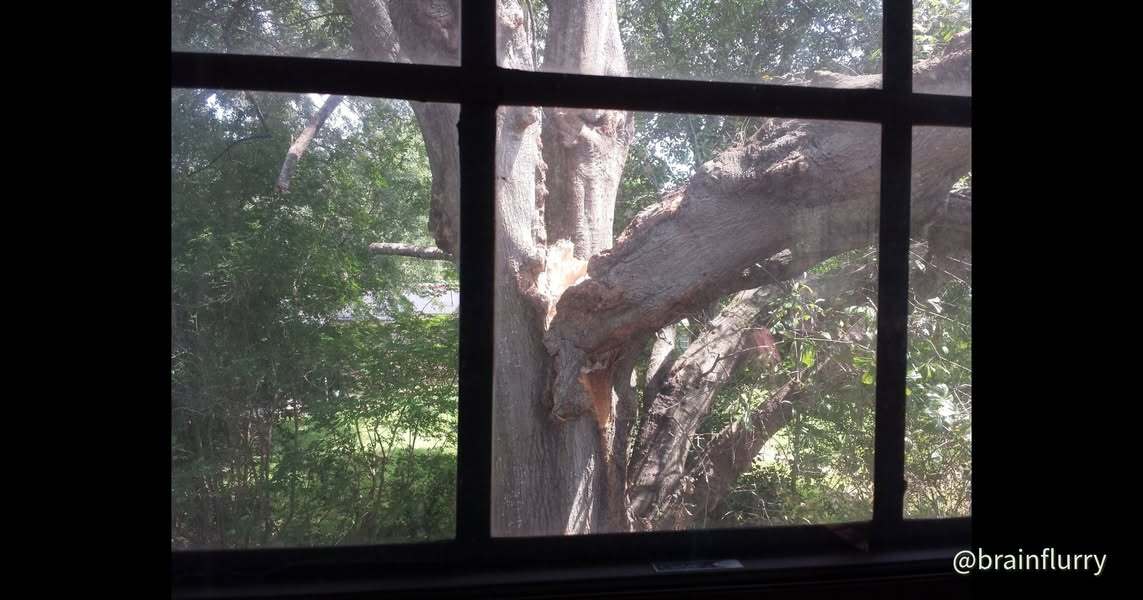
During the most recent ice storm, a large branch partially split from a tree near our house. It posed no danger. The problem was cosmetic. Personally, I care little about a bent tree limb. But as a husband, I wanted to cut the limb down in service to our home. It was a desire that flowed from identity that compelled me. Yet at the same time, part of me wanted to and part of me didn't. Ultimately, I did not cut the limb because I felt like a husband; I cut it because I am one.
This answers the internal struggle of what to do with my feelings.
I acknowledge them.
I listen to their information, but not their instruction.
My feelings do not rule me, instead I govern them (Genesis 4:7).
I examine them for what desire they're attached to and order them so that the greater always rules the lesser (1 Corinthians 9:27).
This desire is the greatest:
To be with the Lord.
To be a faithful spouse to Him.
So, as I am enabled by the Holy Spirit, I choose to operate consistently with that conviction, commitment and character. I serve His house and wait patiently on Him (Philippians 2:13).
Because by His grace, that's what I want and that's who I am.
What I need more than validation is to move according to what I value most.
Lord, I surrender my need of validation to you, and confess my unbelief of the validation you've already provided (Romans 8:30). Help me rest in my acceptance in the beloved (Ephesians 1:6) that I may serve You with boldness, doing those things that please You, knowing You have not left me alone (John 8:29, 14:23).